In 2004
The convulsion that generated the bang-up Indian Ocean seismic sea wave of 2004 was an undersea megathrust earthquake that occurred at 7:59 am local time on Dominicus, 26 December 2004. Information technology was caused past subduction with an epicentre off the west coast of the Indonesian island of Sumatra. The quake itself is known by the scientific community as the Sumatra-Andaman earthquake. The resulting tsunami is given diverse names, including the "Battle Day tsunami".
With a magnitude of Mw nine.1-9.3, it is the third largest earthquake ever recorded on a seismograph. The earthquake had the longest elapsing of faulting ever observed, betwixt viii.3 and x minutes. It caused the entire planet to vibrate as much as 1 centimetre (0.4 inches) and triggered other earthquakes equally far abroad every bit Alaska. According to the U.S. Geological Survey (USGS), the Sumatra-Andaman earthquake is estimated to have released the energy of 23,000 Hiroshima-blazon atomic bombs.
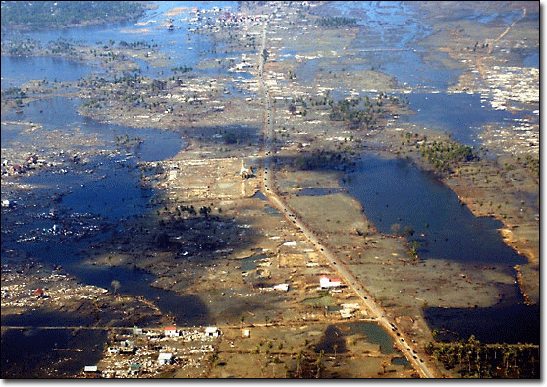
Epitome: 2004 Banda AcehTsunami aerial photograph
Aeriform photo showing flattened houses in Banda Aceh, Indonesia, January 16, 2005, three weeks after a deadly tsunami devastated the isle.
While Japan may have the longest recorded history of tsunamis, the sheer devastation caused past the 2004 Indian Bounding main earthquake and tsunami outcome mark it equally the most devastating of its kind in mod times.
Video: 2004 Boing Solar day Tsunami
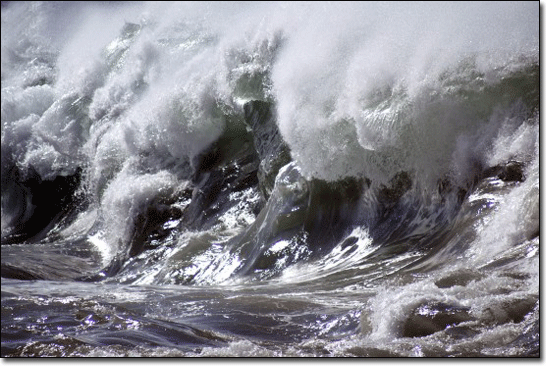
Image: 2004 Sumatra - Tsunami Wave
The December 26, 2004 Indian Ocean tsunami was caused by an earthquake that is thought to accept had the energy of 23,000 atomic bombs.
Inside hours of the earthquake, killer waves radiating from the epicentre slammed into the coastline of 11 Indian Ocean countries, damaging countries from east Africa to Thailand, killing over 230,000 people in 14 countries, and inundating coastal communities with waves upwardly to 30 meters (98 ft) high. It was one of the deadliest natural disasters in recorded history. Indonesia was the hardest-hit country, followed past Sri Lanka, India, and Thailand.
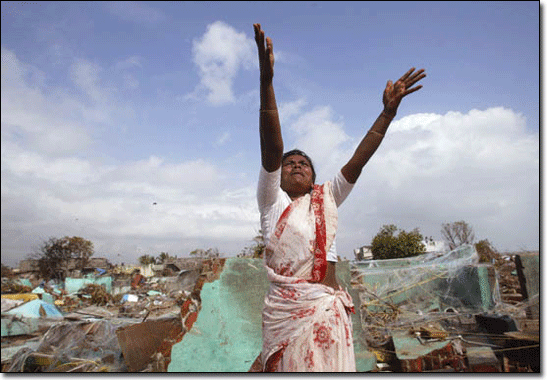
Image: 2004 Sumatra - Woman in a tsunami-damaged village in Tamil Nadu, Republic of india .
Woman in a tsunami-damaged village in Tamil Nadu, Bharat, waving for assistance from a hovering helicopter, Dec. 31, 2004.
Despite a lag of up to several hours between the earthquake and the impact of the tsunami, near all of the victims were taken completely by surprise because there were no tsunami warning systems in the Indian Ocean to detect tsunamis or to warn the full general populace living effectually the body of water.
Video: 2004 Tsunami on the coast of Thailand - The Sea has retreated.
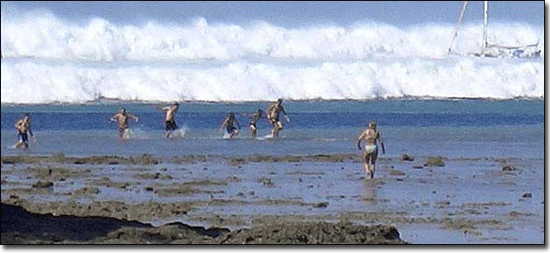
Epitome: 2004 Sumatra - Tourists try to blitz to prophylactic before the tsunami hit the Hat Ari Lay Embankment
Why was the Sumatra seismic sea wave then devastating? The Sumatra-Andaman Islands Earthquake on December 26, 2004, happened in an area with high population densities along the coasts where it struck with maximal forcefulness (come across carmine colours in the simulated image below). Still some areas were more so affected than others.
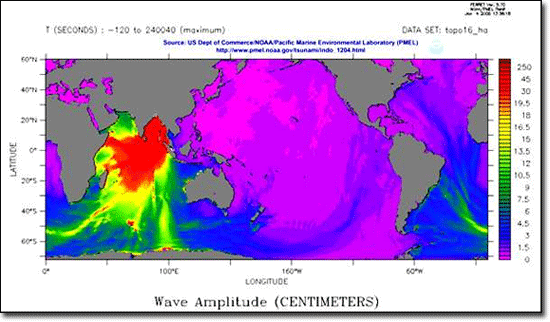
Prototype: 2004 Sumatra - Moving ridge Aamplitude Chart
The worst affected areas had two things in mutual: they have neither experienced hurricanes nor tides. Thus people lived dangerously close to the water and often on ships that would not exist seaworthy in areas where tropical cyclones are common. But from scientific observations nosotros know today that tides and hurricanes are able to modify the coast in ways that may reduce seismic sea wave impairment. Combined with waves, and particularly those from storms, tides tin erode the shoreline out, until a shore profile results that resists tsunamis. On such coasts, a tsunami won't be able to run inland equally far every bit information technology did in Aceh, the region located on the northern tip of the isle of Sumatra, where approximately 170,000 Indonesians were killed or went missing in the disaster, and approximately 500,000 were left homeless.
That is also the reason why the March 2011 seismic sea wave in Japan acquired predictably much damage where the coast had never experienced either substantial tides or storms.
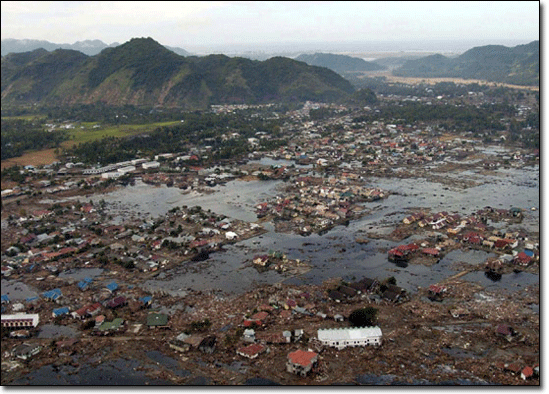
Image: The aftermath of the December 2004 tsunami in Aceh, Indon.
Video: Seismic sea wave 2004 Indonesia
It was boxing twenty-four hours 2004 and Mrs Rinaldiana was walking near her home in Banda Aceh, Sumatra. "Suddenly, I saw the buildings movement, shaken difficult," she said. People running from the shore shouted that the body of water was rising.
Mrs Rinaldiana and her family unit sought shelter in a crowded two-storey house, simply information technology was presently destroyed. "My daughter was hit by the collapsed house, and so she was gone, she told Professor Walter Dudley of the Academy of Hawaii. Mrs Rinaldiana was knocked unconscious. When she came to, the wave was conveying her and she was surrounded by debris. "I thought this was hell. I idea it was the stop of the globe," she said.
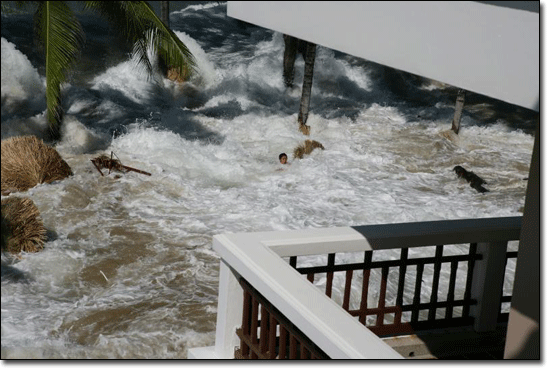
Image: 2004 Tsunami Indonesia - A immature man floating in the raging water
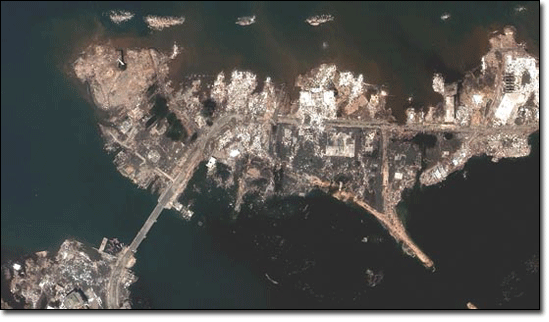
Image: Satellite image of Banda Aceh, Indon, showing the devastation caused by the seismic sea wave of December 2004.
Video: How the Simeulue islanders survived the 2004 Tsunami
2004 Tsunami (Banda Aceh Seismic sea wave): full documentary
Video: 2004 Tsunami Documentary
cotterlialling1969.blogspot.com
Source: https://www.sms-tsunami-warning.com/pages/tsunami-sumatra-2004
0 Response to "In 2004"
Enregistrer un commentaire